14 August 2026
7 min read
How poor flow rate can damage your heat pump's performance

Published on
14 August 2026
Time to read
7 minutes
Key takeaways
- Flow rate is one of the biggest factors affecting heat pump performance, influencing everything from comfort to running costs.
- Most flow rate problems can be fixed without replacing your heat pump, provided the underlying cause is identified correctly.
- Good heat pump performance starts before installation, with proper system design, accurate commissioning and ongoing monitoring.
If your heat pump seems to run constantly, some rooms never quite get warm or your electricity bills are higher than expected, poor flow rate could be the reason.
It's one of the biggest factors affecting how well a heat pump performs. Yet most homeowners have never heard of it.
The good news? A poor flow rate doesn't usually mean your heat pump is broken.
More often, it means your heating system isn't moving enough warm water around your home for the heat pump to work as efficiently as it was designed to.
That doesn't just affect your comfort. It can increase your running costs, put unnecessary strain on your heat pump and even shorten the lifespan of some of its most important components.
So, what exactly is flow rate? And why does getting it right make such a difference?
Let's clear things up.
What is flow rate?
Unlike a gas boiler, a heat pump doesn't blast your radiators with very hot water. Instead, it heats water to a lower temperature and circulates a much larger volume of it around your home. That's what allows a heat pump to heat your home efficiently while using much less energy.
Flow rate sounds like a technical word, but it’s simply the amount of water moving through your heating system.
If enough water is flowing, your heat pump can transfer heat efficiently from the outdoor unit into your radiators or underfloor heating.
But if that flow slows down, the heat has nowhere to go. Imagine trying to fill a bath using a drinking straw – water is still coming through, just not fast enough.
A heat pump with a poor flow rate faces a similar problem. It can still generate heat, but it can't move it around your home efficiently enough to perform at its best.
Why do heat pumps need a higher flow rate than boilers?
This is one of the biggest differences between a gas boiler and a heat pump.
A gas boiler typically heats water to around 70-80°C. Because the water is so hot, it doesn't need to circulate in large volumes to keep your home warm. But a heat pump works differently.
Instead of producing very hot water, it heats water to a much lower temperature – often around 35-50°C depending on your home and heating system.
To deliver the same amount of heat, it needs to move a much larger volume of water around the system. And that's why getting the flow rate right is so important.
If the flow is too low, your heat pump has to work much harder to deliver the heat your home needs.
How poor flow rate affects your heat pump
A poor flow rate doesn't usually cause one dramatic failure. Instead, it creates lots of smaller problems that all add up.
Higher electricity bills
When warm water isn't circulating quickly enough, your heat pump has to run for longer (and harder) to heat your home.
That means it uses more electricity to deliver the temperature you want your home to be. And that impacts your energy bill at the end of every month.
Rooms take longer to warm up
A low flow rate means less heat reaches your radiators or underfloor heating.
As a result, you might notice some rooms struggle to reach the temperature you've set, particularly on colder days.
Lower efficiency
Heat pumps are designed to operate within a specific range of temperatures and flow rates.
If the flow isn't right, your heat pump can't achieve the level of efficiency it was designed for. That means a lower Coefficient of Performance (COP) and higher running costs.
Short cycling
If your heat pump can't transfer heat away efficiently, it may start switching on and off more frequently. This is known in the industry as short cycling.
Not only is it inefficient, but it also places unnecessary wear on the compressor – the heart of the outdoor unit of your heat pump system.
Error codes and system shutdowns
Modern heat pumps constantly monitor temperatures, pressures and flow rates.
If something isn't right, they'll often reduce their output or display a fault code to protect themselves.
That can be frustrating, but it's usually a sign your heat pump is preventing a much bigger problem.
What causes a poor flow rate?
There isn't usually one single cause. But, ultimately, it's something restricting how easily water can circulate around your heating system.
Some of the most common causes include:
Pipework that's too small
Many older heating systems were designed around a gas boiler and use microbore pipes.
In some homes, the existing pipework simply isn't large enough to carry the higher flow rates a heat pump needs.
Air trapped in the system
Air pockets can restrict water flow, reducing how much heat reaches your radiators.
Dirty filters or sludge
Over time, debris can build up inside filters or pipework, making it harder for water to circulate properly.
Incorrect pump settings
If the circulation pump isn't configured correctly, it may not move enough water around your heating system.
Poor commissioning
Even a well-designed heat pump won't perform properly if it hasn't been commissioned correctly.
Commissioning is the final step before your heat pump is handed over. It's where the installer tests, adjusts and fine-tunes the system to make sure everything is working exactly as it should.
It isn't just about switching the heat pump on. It's about checking flow rates, balancing the heating system, verifying temperatures, setting up the controls and making sure your heat pump is performing efficiently before the installation is signed off.
Don't think it's flow rate that's impacting the performance of your heat pump? Learn more about what can cause heat pump comfort problems in our article.
Can a poor flow rate be fixed?
Usually, yes. A poor flow rate doesn't automatically mean your heating system needs to be ripped out and started again.
Sometimes the solution is as simple as:
- bleeding air from the system
- cleaning filters
- adjusting pump settings
- balancing the heating system
- recommissioning the heat pump
In some homes, pipework upgrades may be needed. But that's typically only after other possible causes have been ruled out.
The important thing is identifying the real problem first, rather than simply replacing parts and hoping for the best.
Great heat pump performance starts long before installation
One of the best ways to avoid flow rate problems is to design the system properly from the very beginning. And that's exactly how we do things at Aira.
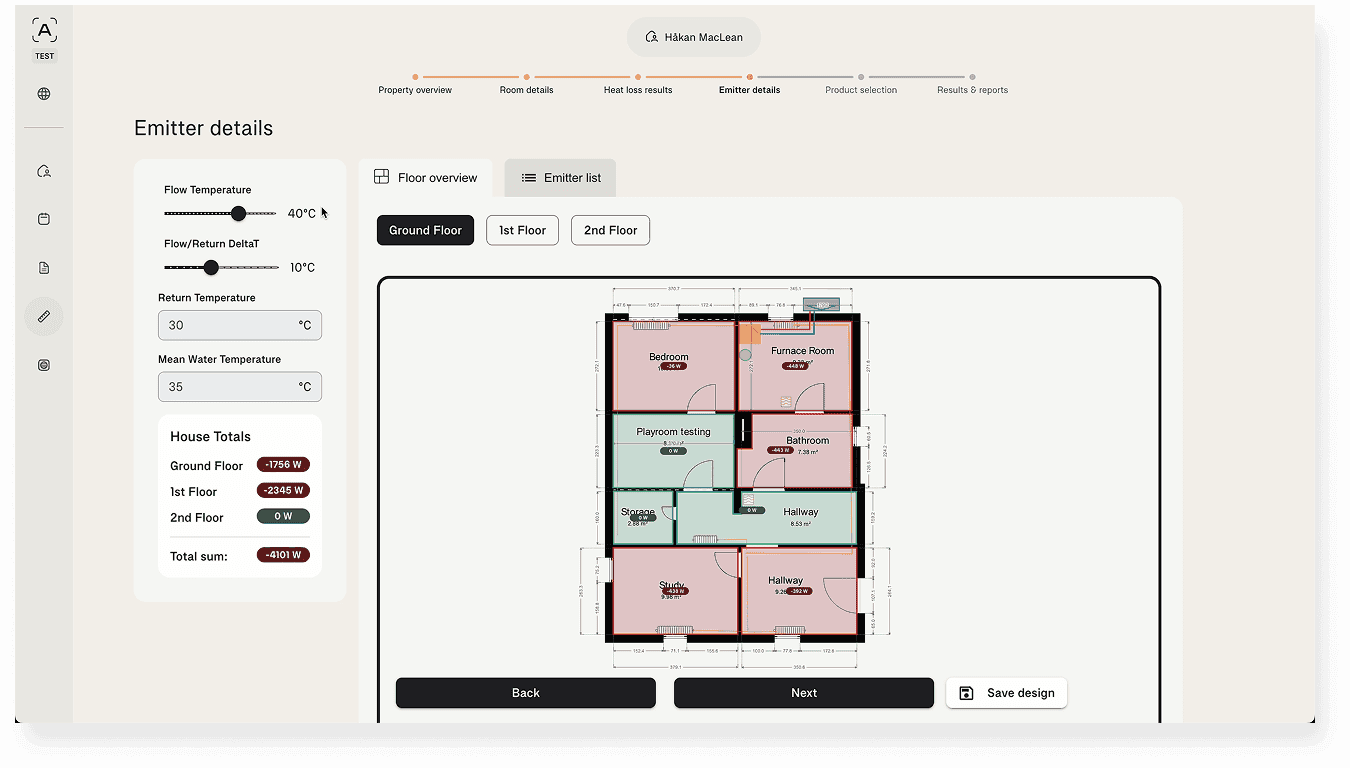
Before our Aira Technicians even arrive at your home, we've already carried out a detailed technical survey using our own bespoke software.
That includes a custom heat loss calculation, as well as a complete assessment of your home's hydraulic requirements.
We calculate everything from radiator sizes and pipework requirements to the flow rates your home needs for your heat pump to perform efficiently.
We even use our own 3D planning software to map out where every component will go before installation begins.
By the time your installation team arrives, they already have a complete technical picture of your home, so the heat pump is installed correctly.
Commissioning matters just as much
Designing the system is only half the story. Once your heat pump has been installed, our technicians don't simply switch it on and leave.
They carefully commission the system by checking flow rates, balancing the heating system, verifying temperatures and making sure your heat pump is performing exactly as it was designed to.
Because the best-performing heat pumps aren't just installed well. They're commissioned properly too.
Why (and how) Aira goes further
Getting the flow rate right shouldn't be something homeowners have to think about. It should simply be part of a well-designed heating system.
But we don’t see our jobs as done when the installation is finished.
That's why every Aira Heat Pump comes with our Aira all-inclusive plan, free for the first year.
Why? Because we're so confident in our heat pump, the way we design every system and the way we install it that we want you to have the same confidence we do.
At the heart of the all-inclusive plan is the 15-Year Aira Guarantee, built around three simple promises:
- Comfort Guarantee – your home stays warm and comfortable.
- Performance Guarantee – your heat pump performs as it should.
- Product & Installation Warranty – parts, labour and maintenance are covered.
And because every Aira Heat Pump is built with Aira Intelligence, we're continuously monitoring your system once it's up and running.
In many cases, we can spot changes in performance before you've noticed them yourself. If something doesn't look right, we'll investigate. If we can fix it remotely, we will. And if we can't, we'll arrange a visit.
Because great heat pump performance isn't just about installing the right equipment. It's about making sure the system continues performing efficiently for years to come.
See how much you could save with an Aira Heat Pump
Answer 4 quick questions about your home to get started
What type of house do you live in?

Related articles
Performance & reliability
4 Oct 2024
How big do heat pump radiators need to be?
Ensuring your radiators are correctly sized to accommodate a heat pump's lower flow rates is crucial for achieving high efficiency. Here's what you need to know to ensure you choose the right radiators for your heat pump system.