14 April 2026
12 min read
Heat pump settings that reduce your bill

Published on
14 April 2026
Time to read
12 minutes
Key takeaways
- The biggest savings usually come from steady heating, sensible room temperatures, and avoiding unnecessary boost or backup heating.
- Heat pumps work best when they run consistently at lower temperatures (18–21°C), not in short, high-heat bursts like a boiler.
- If you’re on a smart tariff, shifting heating and hot water into cheaper periods can lower bills even further.
You probably already know how to save money with a boiler. Keep it off for longer. Heat the house only when you really need to. Warm it up quickly, then let it cool down again.
But with a heat pump, that same strategy can actually lead to higher bills.
That’s because heat pumps work differently. They’re designed to heat your home more steadily and efficiently over time, rather than in short, high-temperature bursts. So if your bills feel higher than expected, the problem is not always the heat pump itself. Quite often, it comes down to the settings.
That’s the good news. Because while you can’t change the weather, you can change how your heat pump responds to it. And small adjustments to temperature, scheduling and controls can have a real impact on what you pay each month.
The aim is not to make your home colder. It’s to help your heat pump do less hard work, more often. That’s where the savings usually come from.
In this guide, we’ll cover the settings that matter most, the mistakes that push bills up, and the easiest ways to get your system working more efficiently.

Talk to a Clean Energy Expert
Why settings matter more than you think
A gas boiler is designed to blast heat into your home quickly. A heat pump is designed to maintain comfort steadily and efficiently over time. And that difference really matters.
If your heat pump is set up like a boiler, with big temperature swings, aggressive schedules and frequent boosts, it will usually cost more to run. If it’s set up to deliver a gentler, more consistent temperature, it will usually run more efficiently.
So if you want to save money, the first step is to stop thinking in “on/off boiler mode” and start thinking in “steady comfort mode”.
1. Start with your room temperature setting
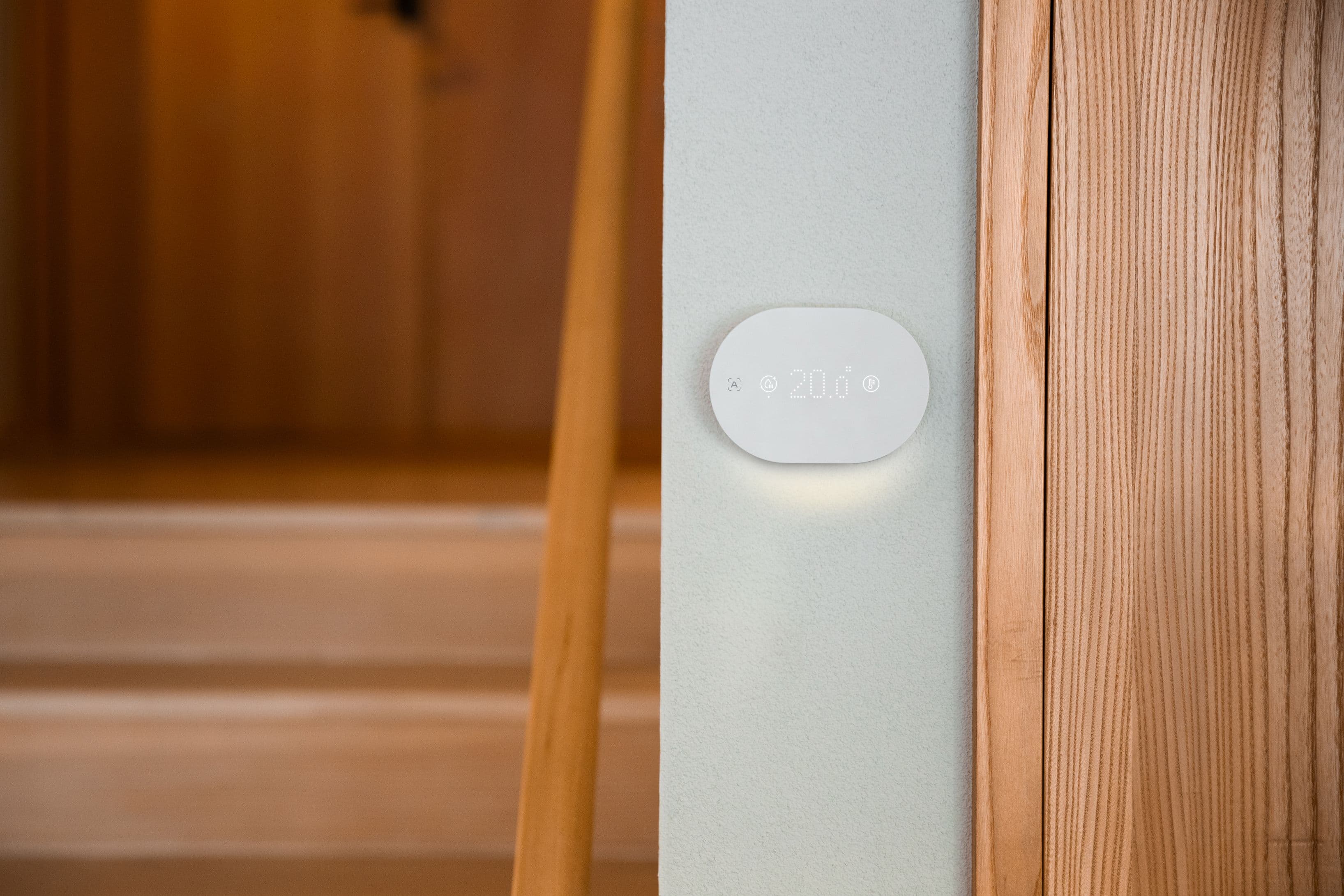
For most homes, the best place to start is your target room temperature. A good rule of thumb is to keep your home at the lowest temperature that still feels comfortable. A heat pump is at its most efficient between 18°C and 21°C, so we recommend somewhere in that region.
That does not necessarily mean we think everyone should live at 19°C. It means every extra degree matters.
If your home is set to 22°C all day, your heat pump will have to work harder and longer to get there and stay there. If you’re comfortable at 20°C, that lower target will usually cost less to maintain.
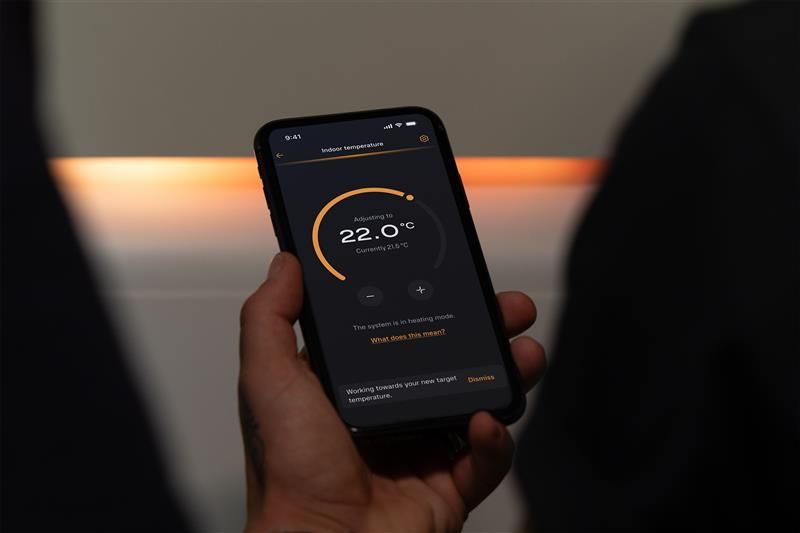
With an Aira Heat Pump, this is where your Comfort Settings matter. If you want to save more, you can choose “Savings”, which tells Aira Intelligence to allow for greater temperature fluctuations. If you want your system to lock on to your chosen temperature at all times, you can opt for Comfort Plus. It’s about finding the right balance for your home and lifestyle.
2. Keep heating steady instead of constantly turning it up and down
This is one of the biggest mindset shifts when switching to a heat pump.
With a boiler, it often made sense to switch the heating on for a quick blast in the morning, turn it off during the day, then back on again in the evening. With a heat pump, that pattern can actually push running costs up.
Why? Because reheating a home after it has cooled down forces the system to work much harder.
Heat pumps are at their most efficient when they’re maintaining a steady temperature, not constantly catching up. That’s why a more consistent approach usually works better.
So if you want a simple way to reduce your bills, try this: keep your heating steady throughout the day, and only lower the temperature slightly overnight or when you’re out. We recommend no more than 2°C.
That typically leads to:
- fewer spikes in energy use
- better overall efficiency
- a more consistent, comfortable home
3. Check your flow temperature and weather compensation
If there’s one setting that can have a big impact on efficiency, it’s your flow temperature.
This is the temperature of the water your heat pump sends through your radiators or underfloor heating. In general, the lower the flow temperature, the more efficiently your system can run – as long as your home still stays comfortable.
On many heat pumps, this is controlled through something called the heating curve (or weather compensation). This adjusts your system based on the temperature outside. If it’s set too high, your heat pump can use more energy than it needs to. If it’s too low, your home may struggle to stay warm.
That’s why, with traditional systems, the goal is usually to make small adjustments and find the lowest setting that still keeps your home comfortable.
With an Aira Heat Pump, it works a little differently.
Instead of manually adjusting heating curves, Aira Intelligence takes care of this for you. It uses real-time weather data and learns how your home responds to heat, automatically adjusting how your system runs to keep things efficient and comfortable.
So rather than fine-tuning flow temperature yourself, your focus is usually on things like your comfort settings and hot water preferences.
For example, you can adjust your tank temperature in the app to control how much hot water is available for your home. A higher tank temperature means more available hot water – but, as with any system, slightly lower temperatures tend to be more efficient.
But the principle is still the same: the less work your heat pump has to do to deliver the same level of comfort, the lower your running costs are likely to be.
4. Use schedules properly
Schedules can save money, but only if they’re working with your heat pump rather than against it.
A good schedule should reflect how your home is actually used. That might mean:
- slightly lower heating overnight
- warmer temperatures before you wake up
- hot water timed for when people shower
But a badly set schedule can do the opposite. If it lets your home cool down too much, your heat pump may need to work harder later. If it heats hot water at the wrong time, you may be paying more than you need to.
With an Aira Heat Pump, you can create your own heating and hot water schedules in the app. But in most cases, the better option is to let Aira Intelligence do the work for you.
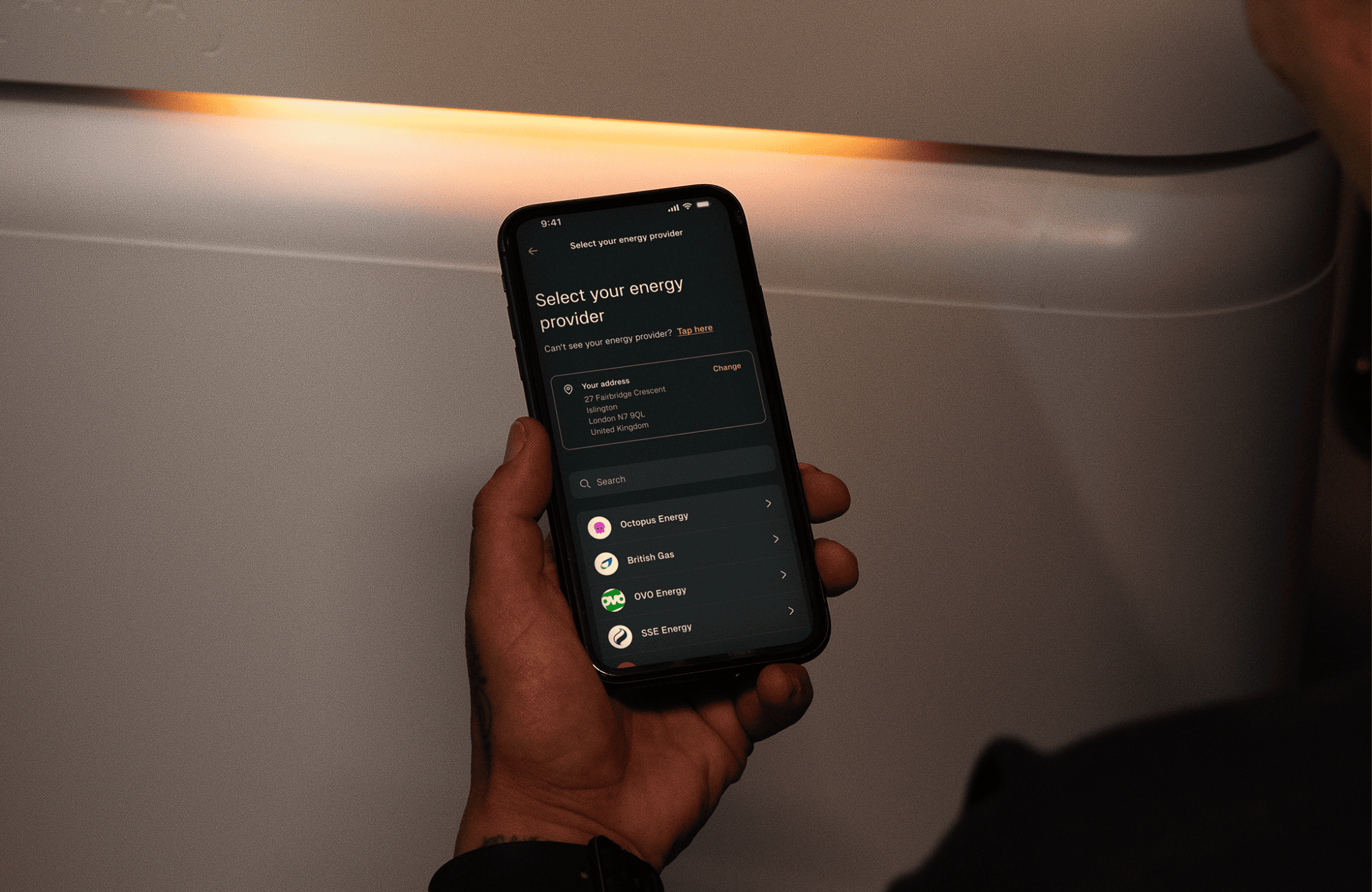
If you connect your tariff, Aira Intelligence will shift heating and hot water into cheaper periods, then ease off when prices rise. So you save even more without lifting a finger – all while keeping a cosy home.
5. Be careful with nighttime setback
Night setback can help. Overdoing it usually doesn’t.
If you lower your home by one or two degrees overnight, that can be a sensible way to reduce energy use while still keeping the house stable. If you drop it much more than that, the morning warm-up can be more expensive than the overnight saving.
That is why heat pump advice often sounds different from boiler advice. The goal is not to let the house go cold. The goal is to keep it comfortably warm with the least effort.
The bottom line is, a small setback is usually fine. A dramatic overnight drop is usually not.
6. Set your hot water wisely
Hot water is one of the most overlooked parts of heat pump running costs.
A heat pump usually heats a hot water cylinder (or tank) more slowly than a boiler. That means timing matters, tank temperature matters, and household habits matter.
There are three big ways to improve this:
First, if you’re creating a schedule, set your hot water to heat up before you’re most likely to need it. If your home is busiest in the morning or evening, make sure your schedule reflects that.
Second, avoid heating hot water more often than necessary. If the cylinder is reheating constantly, you may be using more electricity than you need.
Third, be sensible with tank temperature. With Aira, you can increase your tank temperature, which gives you more usable hot water at any given time. That can be useful if you regularly run short. But hotter water usually means lower efficiency, so it’s worth increasing it carefully rather than pushing it higher than you need.
If you’re on a smart tariff, hot water timing becomes even more important. Heating the tank during cheaper periods can be a very easy way to reduce costs. If you connect your tariff in the Aira app, Aira Intelligence will do this all for you.
7. Don’t rely on “boost” features as a daily habit
Boost modes can be useful, but they should not become your normal way of heating the house or hot water.
On many heat pumps, boost modes or backup heating kick in to deliver extra heat quickly. While useful in certain situations, they’re typically less efficient and can increase running costs if used regularly.
With an Aira Heat Pump, you don’t boost your heating – but you can use “Prepare extra” for hot water.
This temporarily heats your tank so you have more hot water available quickly. It’s designed for those one-off moments, like when you have guests staying over and more showers than usual.
But it’s not meant for daily use.
If you find yourself using “Prepare extra” regularly, it’s usually a sign that something needs adjusting. In most cases, you’ll get better results by:
- slightly increasing your tank temperature
- reviewing your hot water schedule
- or speaking to customer support
So, if you’re constantly asking your system to “catch up”, it’s probably not set up in the most efficient way.
8. Don’t ignore eco mode – but understand what it’s doing
Eco modes sound like an easy win, but they only help if you understand what they’re changing.
On some heat pumps, eco mode lowers room temperatures. On others, it changes how hot water is heated or how the system prioritises efficiency. Sometimes it reduces costs. Sometimes it just delays when heat is delivered.
With an Aira Heat Pump, there isn’t a single “eco mode” switch – but you do have a couple of ways to optimise efficiency.
Your “Comfort settings” let you decide how closely your home sticks to your chosen temperature. Tighter control means more consistent comfort. Looser control can allow for slightly more fluctuation, which may reduce energy use and increase your savings.
You’ll also find an “Eco saver” setting within hot water settings. This lowers the tank temperature to use less energy.
But there’s a balance. If you lower your tank temperature too much and find yourself regularly using “Prepare extra” to top it back up, you may end up using more energy overall — not less.
So rather than relying on a single “eco” switch, the better approach is to:
- set your comfort level based on how you live
- optimise your hot water settings
- and, if you have one, connect your smart tariff so your system can adapt automatically
That way, your heat pump isn’t just trying to use less energy – it’s using energy more intelligently.

9. Keep an eye on the simple things that push bills up
Not every “higher than usual” heat pump bill is caused by a setting.
Sometimes it’s because:
- the outdoor unit is blocked by leaves or debris
- radiators need bleeding
- valves are restricting flow
- the heating curve is too high
- the system is compensating for another issue
These small problems can quietly reduce efficiency and push your energy use up over time.
So, if you’ve already adjusted your settings and your bills still don’t look right, it may be time to stop tweaking and start checking.
If you’re not sure what to look for, we cover the most common issues (and how to fix them) in our guide to heat pump comfort problems.
A quick heat pump settings cheat sheet
If you want the short version, start here:
Room temperature
Aim for the lowest comfortable setting, usually around 18–21°C. For many homes, 19–20°C is a strong starting point.
Heating pattern
Keep temperatures steady. Avoid turning your heating fully off and on. Small adjustments are usually more efficient.
Nighttime setback
Lower the temperature slightly overnight or when you’re out, typically by 1–2°C – not a dramatic drop.
Flow temperature / system efficiency
On some heat pumps, this can be adjusted directly. With Aira, flow temperature is set and efficiency is handled automatically by Aira Intelligence – so the focus is on telling Aira Intelligence what matters most to you in the app and letting your system optimise in the background.
Hot water schedule
Time it for when you actually want use it – for example, before morning or evening demand. If you’re on a smart tariff, try to align your schedules with cheaper periods.
Tank temperature
Only increase if you genuinely need more hot water. Higher temperatures can reduce efficiency, so it’s about finding the right balance.
Hot water boost (“prepare extra”)
Use this occasionally when you need more hot water than usual – for example, if guests are staying. If you’re using it regularly, it’s a sign your hot water tank (cylinder) settings may need adjusting.
Smart tariff connection
If you have a smart tariff, connect it. This is one of the easiest ways to let your heat pump automatically reduce running costs. With Aira, you can connect to any tariff, and Aira Intelligence will optimse everything for you.

How to tell if your changes are working
Don’t judge changes after one cold evening.
Instead, give it a bit of time and look for patterns:
- Is your home still comfortable?
- Is the system running more steadily?
- Are you using less electricity over a week or month?
- Are you avoiding expensive peak periods if you’re on a smart tariff?
The best settings are the ones that keep your home comfortable without making your heat pump work harder than it needs to. And these changes should show up in your monthly bills.
The five settings to check today
If you only change five things, we recommend:
1. Lower your target room temperature slightly (if you can do so comfortably)
2. Avoid big overnight temperature drops
3. Check your hot water schedule matches your routine (note, with an Aira Heat Pump, this rarely equates to higher savings. We recommend letting Aira Intelligence do this optimisation for you)
4. Make sure you’re not relying on “prepare extra” or hot water boosting regularly
5. Connect your smart tariff so your system can optimise around price. If your heat pump doesn’t do this automatically, manually adjust your heating and hot water schedules around cheaper price periods.
Final thoughts
The best heat pump settings for efficiency aren’t dramatic. They’re small, smart adjustments that help your system run steadily instead of constantly catching up.
For most homes, that means lower target temperatures, smaller setbacks, better-timed hot water, and fewer unnecessary boosts.
And if you’re using an Aira Heat Pump, it also means letting Aira Intelligence do more of the work – learning your home, adapting to the weather, and running your system at the right time for both comfort and cost.
Because the cheapest heat pump to run is usually the one that’s set up to work with your home, not against it.
See if your home is ready for a heat pump
What type of house do you live in?

Related articles

Solar & battery
2 Oct 2026
Can solar panels power a heat pump entirely?
Solar panels can power your heat pump. But only when they’re generating enough electricity. Discover how winter, battery storage and smart controls like Aira Intelligence determine how much of your heating can come straight from your roof.

Performance & reliability
22 Feb 2026
Why your heat pump bills might be higher than expected
Heat pumps are incredibly efficient, but their performance depends on the whole home. When the system is designed correctly and paired with the right settings and tariff, that’s when the real savings appear.