24 September 2026
8 min read
Europe’s energy independence starts at home

Published on
24 September 2026
Time to read
8 minutes
Key takeaways
- Europe’s reliance on imported fossil fuels leaves countries – and household energy bills – exposed to events beyond their control.
- Replacing a gas boiler with a heat pump is the first step towards home energy independence. Solar panels and battery storage take it further.
- When a heat pump, solar and battery work as one intelligent system, homes can use, store and sell energy at the right times – cutting overall energy costs by up to 80%.
Europe has just been handed a €90 billion reminder of what energy dependence costs.
In her 2026 State of the European Union address, European Commission President Ursula von der Leyen said Europe had spent an additional €90 billion on imported fossil fuels since the conflict in the Middle East began. All that money left Europe without adding any more energy to its supply.
Her conclusion was simple: Europe needs more affordable, homegrown clean energy. And it needs to electrify.
That might sound like something for politicians and power companies to solve. But energy independence can begin much closer to home.
Every gas boiler ties another household to a fuel whose price is shaped by international markets, political disputes and events happening thousands of miles away. You can’t control any of that. But you can reduce how much your home depends on it.
It all starts with a heat pump. Add solar panels and a home battery. Then connect everything through one intelligent system that decides when to use, store and sell energy. So you save even more without lifting a finger.
You won’t need to cut your home off from the grid. That’s harder to do in practice. But you can set up your home to need much less from it.
That’s what energy independence looks like at home: lower bills, cleaner heating and far less power handed to the big gas giants and fossil-fuel markets you can’t control.
Europe’s energy dependence reaches your front door
The UK may no longer be part of the EU, but it isn’t separate from the global energy market.
Britain buys gas on international markets, where prices can rise quickly when supplies are disrupted. And gas doesn’t only affect what you pay to run a boiler. It frequently sets the wholesale price of electricity too. That means an event on the other side of the world can eventually arrive on your energy bill.
Renewable electricity is helping to change that. But as long as homes continue burning gas and the grid relies on gas-fired power, fossil-fuel markets will keep having a say over what households pay.
Energy independence is how we start taking that power back.

What energy independence means for your home
Energy independence doesn’t usually mean disconnecting from the grid and living entirely from the power generated on your roof.
That’s possible in theory. In a British winter, it’s rarely practical. You can read more in our article on whether solar panels can power a heat pump entirely.
Real home energy independence means:
- using less imported fossil fuel;
- generating more clean electricity at home;
- storing energy until you need it;
- buying electricity when it costs less;
- selling spare electricity when it’s worth more;
- relying less on unpredictable energy markets.
You’ll probably still use the grid. But you’ll use it more intelligently – and need less from it.
It isn’t about becoming your own power station overnight. It’s about gradually giving your home more control over where its energy comes from, how (and when) your home uses it, and what it costs.
A heat pump is the first step away from gas
For millions of homes, the gas boiler is the biggest direct connection to fossil fuels.
Every time it heats a room or provides hot water, it burns gas. Replace it with a heat pump and the home no longer needs gas for heating. So, unless you have a gas stove, you never pay a gas bill again.
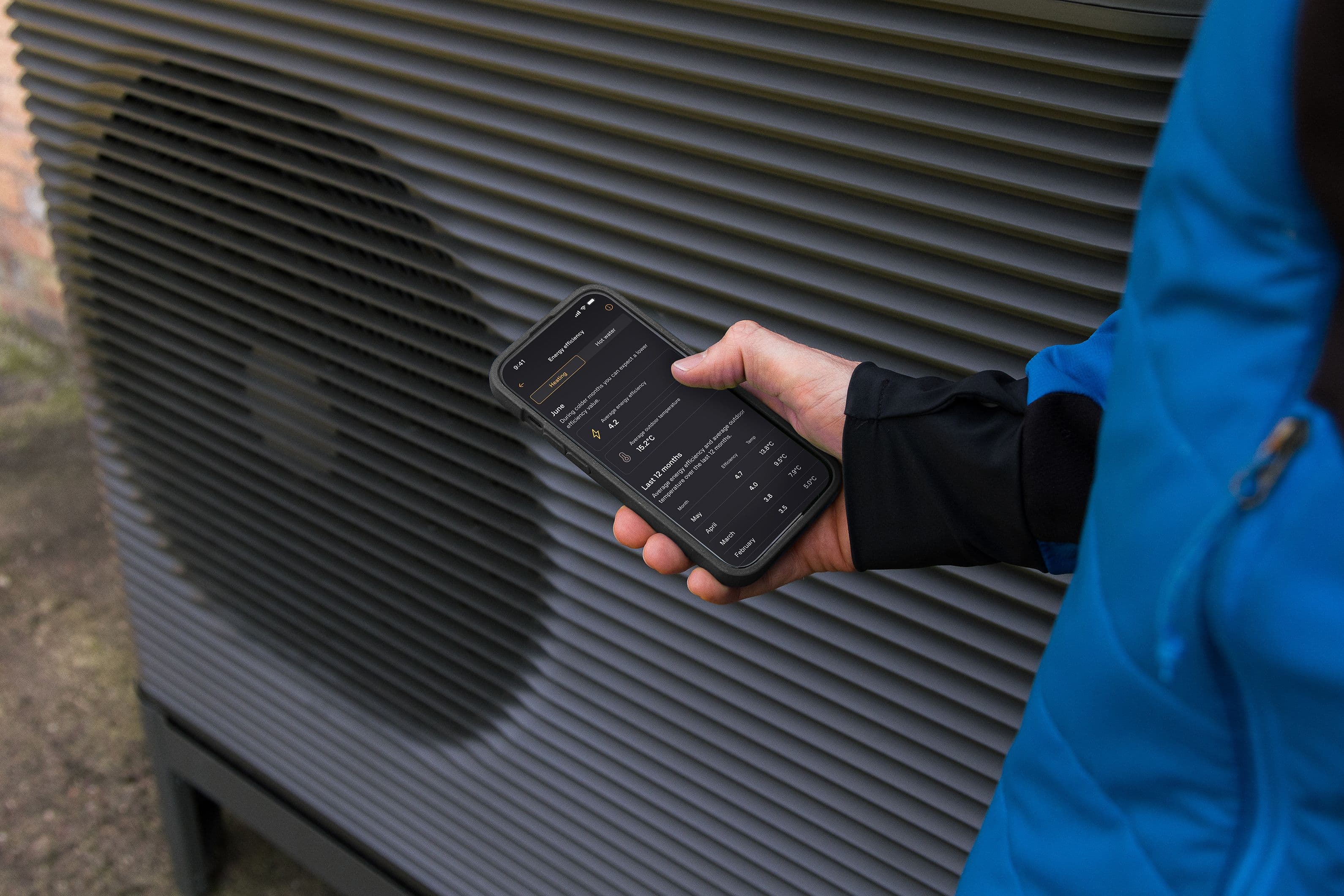
A heat pump works differently than a boiler. Instead of burning fuel to create warmth, it collects existing heat from the outside air, raises its temperature and transfers it into the water flowing around your heating system.
Because it moves heat rather than creating all of it from scratch, it can deliver several units of warmth for every unit of electricity it uses. That makes it far more energy efficient than a boiler. The Aira Heat Pump, for example, heats your home at least 4X more efficiently than a gas boiler over the course of the year.
It also means your heating can increasingly run on clean electricity as more wind, solar and other renewable power joins the grid.
A heat pump won’t make your home fully energy independent on its own. But it removes the need to burn gas inside it. And that’s a pretty good place to start.

Solar panels generate clean energy on your roof
Once your heating runs on electricity, solar panels can provide some of that power from your own roof.
Solar PV panels turn daylight into electricity. Your home uses that electricity first, helping power its appliances and heat pump while the panels are generating.
And yes, solar panels still generate electricity when it’s cloudy. They simply produce less than they would on a bright summer day.
When the panels aren’t producing enough, the grid fills the gap. When they produce more than the home needs, the spare electricity can be stored or sold.
Suddenly, your roof isn’t just keeping the rain out. It’s helping power your home too – and making you more energy independent.
A home battery keeps your solar energy for later
Solar panels and household energy use don’t always keep the same hours.
Your panels may generate plenty of electricity around the middle of the day, when nobody is home. Then everyone returns in the evening, just as solar generation begins to fall.
In other words, the timings are all off. But a home battery closes that gap.
It stores spare solar electricity during the day, ready for your home to use later. That could mean powering your evening routine or helping your heat pump keep the home cosy after sunset when the house gets colder.
With the right tariff, a battery can also even store cheaper electricity from the grid. Your home can then use it when prices rise rather than buying more expensive electricity at that moment.
Ultimately, with solar panels and a home battery, you make more of your own energy. You waste less of it. And the grid becomes a backup and trading partner rather than your home’s only option.
Smart tariffs give you more control over energy prices
A standard electricity tariff generally charges the same unit rate throughout the day – and, in the UK, it’s what a lot of us are used to. A smart, dynamic, or day & night tariff can offer different prices at different times.
That creates an opportunity for you to save even more, but only with the right equipment.
Your heat pump can work a little harder when electricity is cheaper and ease back when it costs more. Your battery can charge during lower-priced periods, then power your home when prices rise.
Spare solar electricity can also be sold back to the grid when the market peaks through an export tariff. Depending on the tariff, there may be times when exporting that energy makes more sense than storing it.
Of course, nobody wants to spend the day watching energy prices and telling each device what to do next. That would be energy independence with a full-time admin job attached. Your home energy system needs to do the work for you.
One intelligent system makes it effortless
A heat pump reduces your reliance on gas. Solar panels generate clean electricity. A home battery saves it for later. A smart tariff gives you access to changing prices.
They’re all incredibly useful on their own, but they become much more powerful when they work together.
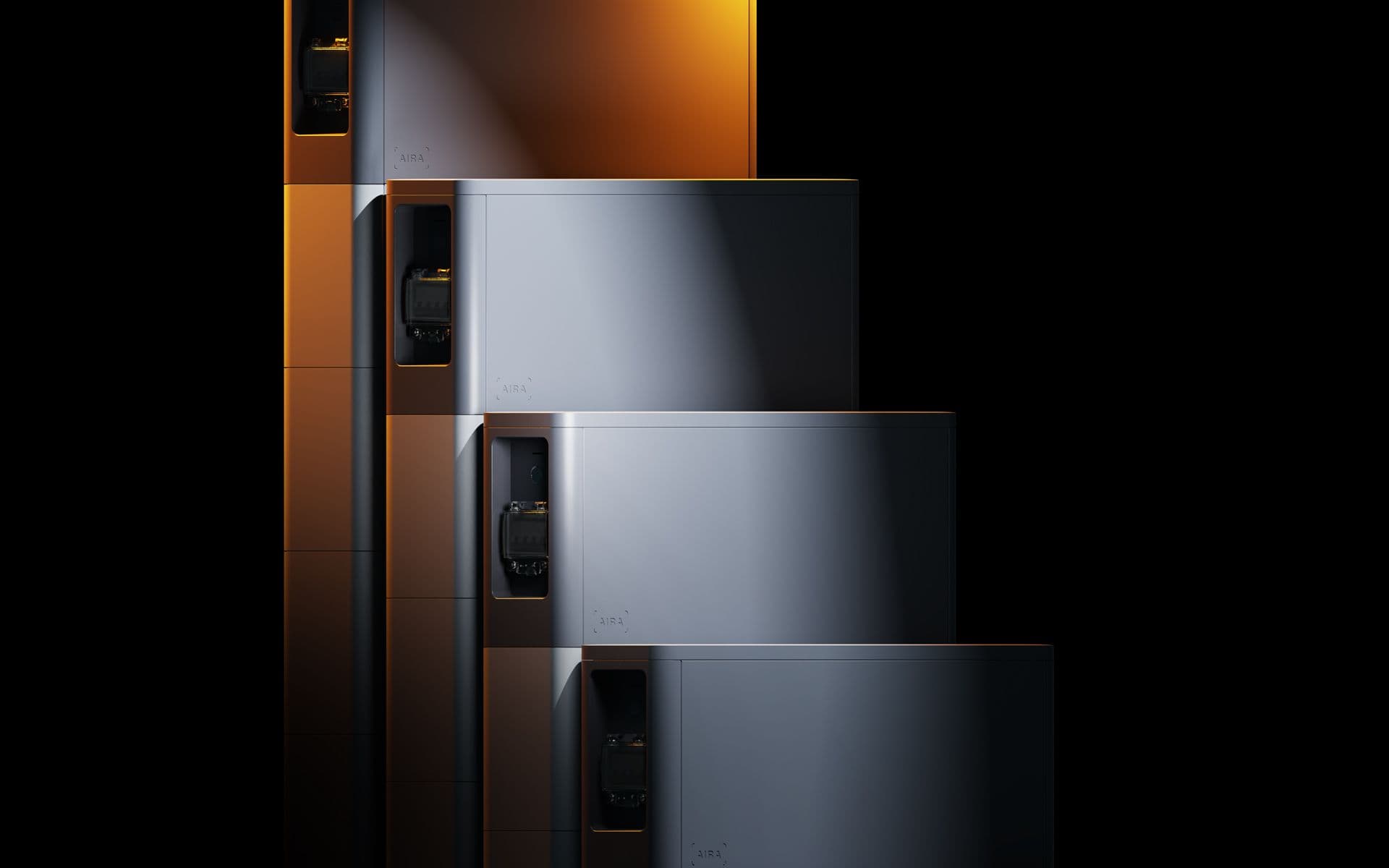
The Aira Home Energy System connects the Aira Heat Pump, solar panels, Power Store home battery and smart Power Hub inverter. Aira Intelligence then quietly controls and coordinates the whole lot.
This powerful AI looks at how your home uses energy, the weather forecast, your comfort settings, expected solar generation and your chosen tariff. It uses that information to decide when it makes sense to heat, store, buy or sell energy.
That might mean heating more water while your panels are producing spare electricity. It could mean charging the Power Store when grid prices dip or saving stored energy for a more expensive part of the day.
You don’t need to make those decisions yourself. Your home simply uses energy in the most efficient way.
As a result, switching from a gas boiler to an Aira Heat Pump connected to a dynamic tariff can cut energy bills by up to 30%. Add solar panels, Power Store and a solar export tariff, and overall energy-cost savings can reach up to 80%, including money earned from exporting electricity.
More control. Less waste. Lower costs. Just the way it should be.
Energy independence makes the whole system stronger
One household switching away from gas won’t transform Europe’s energy system. But millions can.
Every gas boiler replaced by a heat pump reduces the amount of fossil fuel homes need to burn. Every solar panel adds more homegrown clean electricity. Every battery helps store that energy until it’s useful.
Intelligent systems can also move some electricity use away from the busiest and most expensive times of day. That makes it easier for the grid to balance supply and demand while using more renewable power.
The benefit begins inside the home: lower bills, cleaner heating and greater control. But it doesn’t stop there.
Homes working together can reduce Europe’s need for imported fossil fuels, keep more energy spending within its own economy and build an energy system that’s less exposed to the next global shock.
That is energy security, one home at a time.

Cleaner home energy needs to become easier to access
Technology alone won’t make Europe energy independent.
Clean electricity needs to become more affordable. Government policy needs to give households the confidence to invest. Grants and flexible finance need to make the initial cost manageable. And switching to a heat pump needs to feel far simpler than it does today.
Aira Group CEO Anthony Loizeau puts the choice plainly:
“Why haemorrhage money when there is a cleaner, cheaper and more secure alternative available?”
The answer is to accelerate electrification while making intelligent clean-energy technology available to more homes – not just those able to navigate a maze of products, installers and energy tariffs.
That’s why Aira brings a free home assessment and quote, system design, installation, grant application, intelligent optimisation and ongoing aftercare under one roof.
Energy independence starts with the first switch
No home needs to do everything at once.
For many, the journey begins by replacing a fossil-fuel boiler with a heat pump. Solar panels can generate more of the electricity the home needs. A battery can keep that energy for later. Intelligent controls can bring everything together and make every kilowatt work harder.
Each step means buying less energy you can’t control and making better use of energy that’s cleaner, more predictable and closer to home.
Europe needs greater energy independence. And it can start at your front door.
See how much you could save with an Aira Heat Pump
Answer 4 quick questions about your home to get started
What type of house do you live in?

Related articles

Costs & benefits
11 Sept 2026
What is the most economical heating system for your home?
Wondering which heating system will cost you the least to run? Here's a straight answer – and why more UK homeowners are switching away from gas.
Costs & benefits
29 Jul 2026
Heat pump grant UK 2026: £9,000 for oil & LPG boiler homes
The UK heat pump grant has increased to £9,000 for oil and LPG homes. Here’s who qualifies, what it covers, and why now could be the right time to switch.
Costs & benefits
22 Jul 2026
VAT scrapped on electricity bills: What it means for heat pumps
The government is scrapping VAT on household electricity bills from 1 October. Here's what that means for heat pump running costs, why electricity is becoming more affordable, and how the latest change strengthens the case for switching from a boiler.
Costs & benefits
28 May 2026
Energy price cap increase: Are heat pumps now cheaper than gas boilers?
Ofgem’s latest energy price cap rise is pushing gas bills up again. Discover why more UK homeowners are considering heat pumps as a cheaper, smarter, and more stable alternative to gas boilers.
Costs & benefits
21 Apr 2026
Why are electricity prices linked to gas – and what’s changing in the UK?
Why do electricity prices rise when gas prices spike? This guide explains how the system works, what’s changing, and what it means for your energy bills.
Costs & benefits
3 Apr 2026
Adding a battery to existing solar panels: what to know in 2026
Already have solar panels? Adding battery storage lets you keep more of the electricity your panels generate and use it when it matters most. In this guide, we explain how to add a battery to existing solar panels in the UK, what to check first, and how Aira integrate solar, storage and heating into one intelligent setup.